
What the Industry Says
In France, detected fraud reached €695 million in 2023, an increase of more than 18% compared to the previous year. But this figure represents only the tip of the iceberg; actual fraud could account for 3 to 10% of benefits paid.”
Read the Story on:

Insurance Fraud Prevention Agency
Why Identity Risk is critical in insurance
Digital distribution has made it easy to spin up throwaway identities and attack multiple touchpoints from quote engines to self-service portals and claims. Synthetic profiles and impersonation now bypass basic checks; organised rings coordinate quotes, Mid Term Adjustments (MTAs) and payouts.
Top Threats
- Application & policy fraud: ghost broking, fronting, synthetic identities, mis-stated risk data.
- Account takeover & policy misuse: portal hijacks leading to fraudulent MTAs and bank-detail changes.
- Claims fraud (opportunistic & organised): inflated damage/injury, staged accidents, fabricated losses.
- Speed vs control: automation without identity trust exposes quote/First Notification of Loss (FNOL) to abuse.

How Oneytrust protects insurance journeys from day one
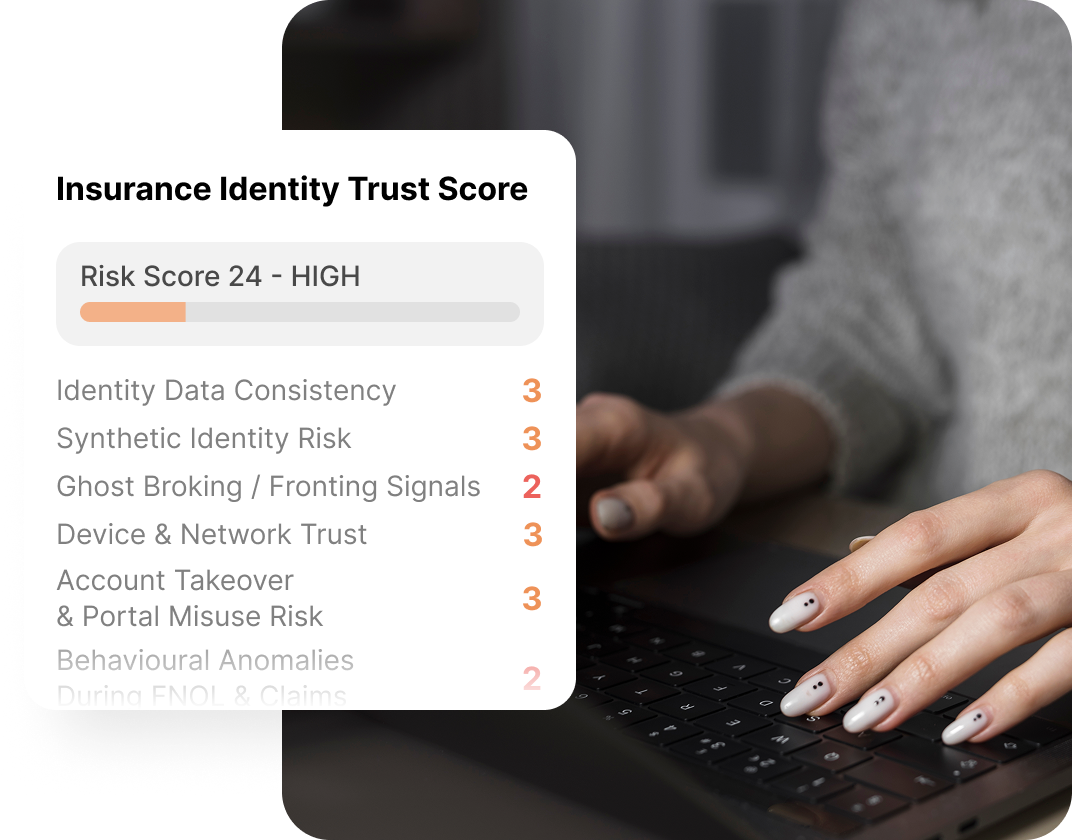
Oneytrust’s D-Risk ID takes an identity-first approach to secure quote, onboarding, policy changes and claims. It analyses identity signals, device/network fingerprints and behaviour to compute a real-time identity trust score, so you can approve good users instantly and stop bad ones at the door.
Key Features


Where it applies
- At quote & onboarding: block ghost brokers/fronting without friction for all users
- Account & MTAs: step-up only on risky sessions (new device/geo, anomalous behaviour, suspicious detail changes).
- FNOL & claims: auto-route low-risk claims; pre-package high-risk cases for human review
- Payouts: verify destination accounts and check link to known fraud networks before release.

Identity verification in insurance—what you need to know
See how Oneytrust stops identity fraud for insurers
Talk to our experts about how we can prevent identity fraud, protect quote-to-claim journeys and improve loss ratios—without adding friction.



 English (UK)
  Français
  Español
  Italiano
  Nederlands
  Português
  Română