







The Guide to Finance Industry Fraud Trends in France
A fraude nos serviços financeiros está se tornando cada vez mais complexa e muito mais difícil de ser revertida depois que os fundos deixam o sistema. Este relatório explora:
- Por que taxas de fraude aparentemente baixas ainda revelam uma exposição significativa para empresas de serviços financeiros
- Como os pagamentos instantâneos se tornaram um alvo enorme – exigindo novas abordagens para a prevenção de fraudes
- Por que as fraudes de manipulação contornam os controles de autenticação tradicionais
- Como identidades sintéticas alimentam o abuso de onboarding
Se você atua no setor de pagamentos, bancos, BNPL ou finanças para consumo, este é um guia essencial sobre as áreas em que você deve focar seus esforços de combate à fraude.
Obtenha sua cópia do relatório de 2026.

Authentication protects credentials but not intent
Strong Customer Authentication has reduced classic credential theft, but manipulation-led fraud is now rife. Social engineering, beneficiary deception and authorised push payment scams now bypass many traditional controls because the victim authenticates willingly. That changes where fraud teams need visibility.

Synthetic identities are reshaping onboarding fraud
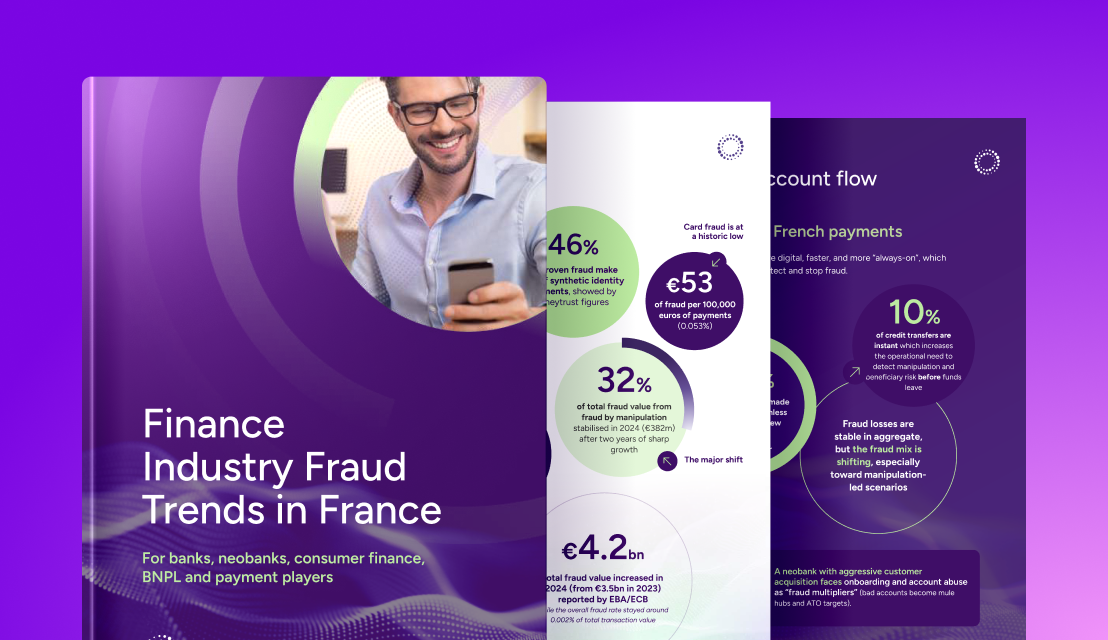
Our analysis shows that 46% of confirmed fraud cases involve synthetic identities. Fraudsters are combining real and manipulated data to create accounts that appear legitimate early on, before later-stage abuse, mule activity or bust-out losses emerge. The report explains why identity must be treated as a continuous risk signal rather than a one-time KYC event.

‘Low’ fraud rates don’t mean low risk anymore
French payment fraud rates may be historically low, but loss still reached €1.19bn in 2024. The structure of risk has fundamentally changed, with manipulation scams accounting for 32% of total fraud value. Firms must now focus on preventing severe, irreversible losses before funds move.

Instant payments are collapsing the intervention window
With instant transfers now mainstream, firms have limited time to detect and stop fraud. Once funds move, recovery becomes much harder too. This report explores why real-time behavioural signals, beneficiary risk analysis and continuous identity monitoring are becoming critical across the account flow.


