







The Guide to Finance Industry Fraud Trends in France
Frauda în domeniul serviciilor financiare devine din ce în ce mai complexă și mult mai dificil de anulat odată ce fondurile părăsesc sistemul. Acest raport explorează:
- De ce ratele aparent scăzute de fraudă încă prezintă o expunere semnificativă pentru companiile din sectorul serviciilor financiare
- Cum plăți instantane au devenit o țintă majoră – necesitând abordări noi pentru prevenirea fraudei
- De ce fraudeurile de tip manipulare ocolesc controalele tradiționale de autentificare
- Cum identitățile sintetice alimentează abuzul în procesul de onboarding
Dacă vă desfășurați activități în domeniul plăților, al serviciilor bancare, al BNPL sau al finanțării pentru consumatori, acesta este un ghid esențial pentru domeniile în care ar trebui să vă concentrați eforturile de combatere a fraudei în continuare.
Get your copy of the 2026 report.

Authentication protects credentials but not intent
Strong Customer Authentication has reduced classic credential theft, but manipulation-led fraud is now rife. Social engineering, beneficiary deception and authorised push payment scams now bypass many traditional controls because the victim authenticates willingly. That changes where fraud teams need visibility.

Synthetic identities are reshaping onboarding fraud
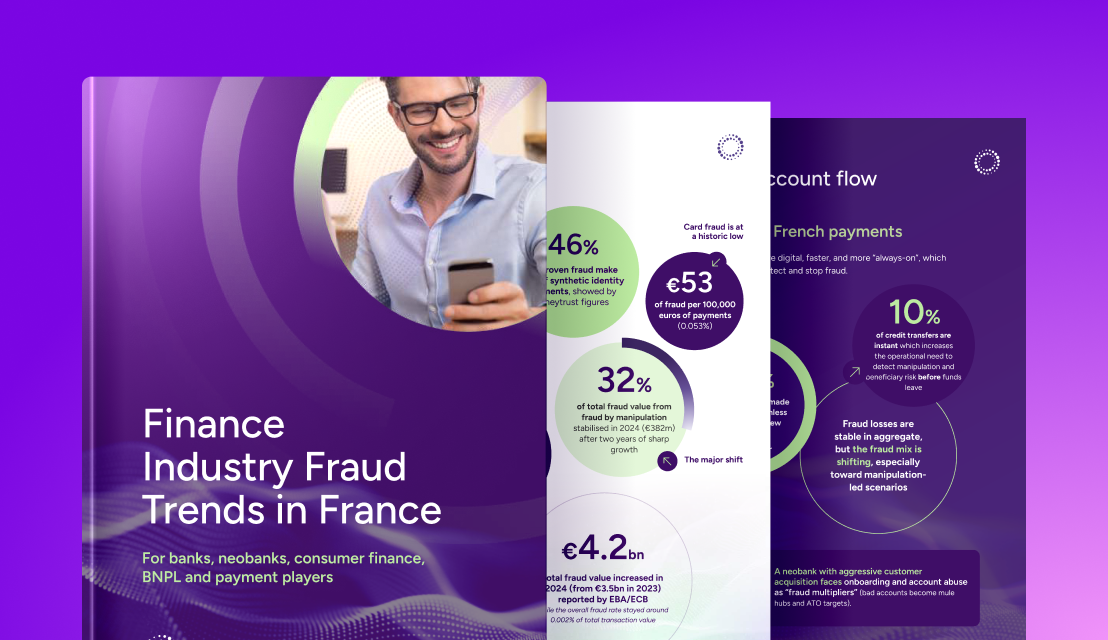
Our analysis shows that 46% of confirmed fraud cases involve synthetic identities. Fraudsters are combining real and manipulated data to create accounts that appear legitimate early on, before later-stage abuse, mule activity or bust-out losses emerge. The report explains why identity must be treated as a continuous risk signal rather than a one-time KYC event.

‘Low’ fraud rates don’t mean low risk anymore
French payment fraud rates may be historically low, but loss still reached €1.19bn in 2024. The structure of risk has fundamentally changed, with manipulation scams accounting for 32% of total fraud value. Firms must now focus on preventing severe, irreversible losses before funds move.

Instant payments are collapsing the intervention window
With instant transfers now mainstream, firms have limited time to detect and stop fraud. Once funds move, recovery becomes much harder too. This report explores why real-time behavioural signals, beneficiary risk analysis and continuous identity monitoring are becoming critical across the account flow.


