







2026 Annual Overview of Fraud in France
Card fraud rates may be historically low. But retail fraud has shifted beyond the checkout into BNPL, returns, refunds, delivery abuse, loyalty theft and promotion exploitation. This report explores:
- Why card fraud rates no longer tell the full story
- How BNPL became retail’s highest-risk payment channel, and why payment data alone isn’t enough
- How post-purchase fraud erodes margins and promo abuse hides inside legitimate-looking orders
- What synthetic identities, loyalty abuse and behavioural signals reveal about modern retail fraud
If you operate high-volume ecommerce or retail journeys, this is an essential guide that will help you understand and adapt to major challenges.
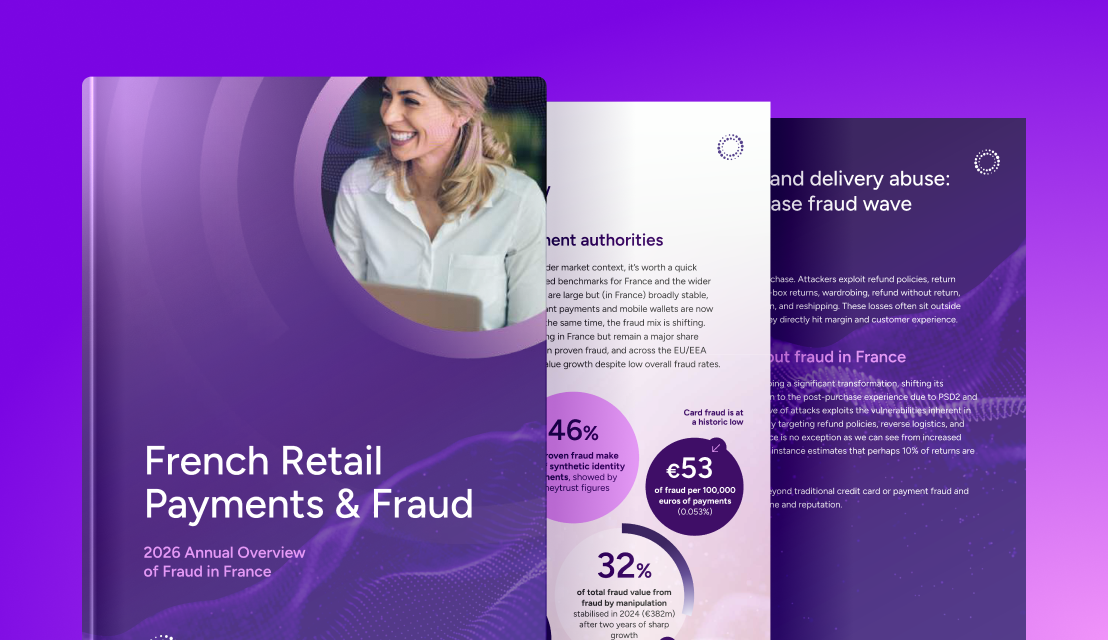
Get your copy of the 2026 report.

Retail fraud has moved beyond the checkout
French card rates remain at a historic low, but fraud has not disappeared. It has shifted into areas that many retailers struggle to measure properly: refunds, returns, delivery abuse, loyalty programmes, gift cards and promotional exploitation. The result is operational loss that often sits outside traditional fraud dashboards.

Promotion abuse is now a major commercial issue
Our analysis identified more than 23,000 suspected promotion abuse cases across one major French retailer in a single month, amounting to c.€2m in value. The fraud patterns were not obvious at transaction level; they emerged through device reuse, behavioural analysis and linked digital identities.

BNPL fraud is growing fast; most controls aren’t built to combat it
BNPL now carries a fraud rate by value of 1.53% versus just 0.05% for cards. . This report explores why deferred payment journeys attract such criminal attention… and what retailers should prioritise next.

Synthetic identities and behavioural fraud are reshaping retail risk
Our data shows that 46% of confirmed fraud involves synthetic identity elements. Fraudsters increasingly combine legitimate customer signals with manipulated digital behaviour, making isolated transaction checks less effective. This report explores why retailers need better visibility of the bigger picture.