
The rapid rise of generative artificial intelligence is transforming many sectors, and e-commerce is no exception. Among the new challenges emerging, AI-fuelled return and refund fraud has become a real scourge for platforms, retailers and consumers.
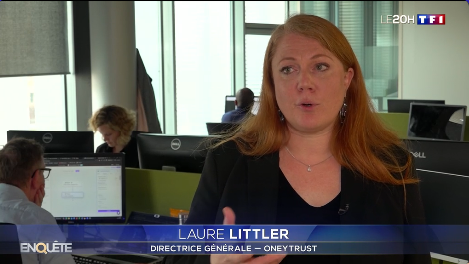
A phenomenon that TF1 recently highlighted in its 8pm news report, in which Oneytrust was able to share its expertise and shed light on these new fraudulent practices.
🚨 Fraud is evolving rapidly thanks to generative AI
Fraudsters now have access to technologies that were once the preserve of experts. It takes just a few clicks to generate:
- doctored images of products “supposedly” broken,
- forged supporting documents,
- and well-crafted synthetic identities
As TF1 explains, private sellers are now facing disputes based on AI-manipulated photos, with automated systems sometimes turning against the honest victim themselves.
One user interviewed recounted losing €180 due to an AI-generated image showing a supposedly broken vinyl record — an item that, by its very nature, does not break in that way. The platform’s automated system, however, ruled in favour of the fraudster, illustrating the vulnerability of traditional checks.
This phenomenon is part of a global trend: fraud involving doctored images is skyrocketing, with a 15% increase in falsified images in claims since the start of 2025.
📈 Three major trends observed by Oneytrust
At Oneytrust, our experts have identified three major shifts:
- More sophisticated fraud
Generative AI can produce highly realistic images, some of which are impossible to distinguish with the naked eye. Synthetic identities or invoices recreated pixel by pixel can fool traditional verification systems.
- The industrialisation of attempts
What was once manual work is now automated. Fraudsters are now launching vast, coordinated campaigns, drastically increasing the volume of attempts detected on e-commerce sites.
This industrialisation is confirmed by the TF1 report, which warns of waves of scams potentially affecting millions of people.
- New weak signals
Traditional methods are no longer sufficient. When evidence is generated by AI, behaviour, metadata and contextual inconsistencies become the new areas of analysis.
🛡 AI: an essential tool for countering these new attacks
With fraudsters now using AI, anti-fraud solutions must evolve. That is why Oneytrust has integrated advanced artificial intelligence models at the heart of its technologies.
In particular, our systems enable us to:
👉 Detect behavioural and contextual inconsistencies
Frequency of returns, unusual histories, multiple addresses or devices: the patterns speak for themselves.
Our solution cross-references these signals to identify abuse well before it becomes visibly repetitive.
👉 Adapt in real time
Fraud methods change every week. Our models continuously recalibrate to keep pace with these changes and block emerging attacks.
👉 Identify organised networks
By analysing data structure and correlating identity details, devices and network history, Oneytrust exposes organised criminal groups operating under different identities or accounts.
👉 Tailor detection to your returns processes
Oneytrust adapts precisely to each retailer’s returns policies and internal workflows, incorporating their rules, thresholds and operational specifics.
🤝 The real challenge: maintaining trust
In this context, the issue is no longer simply about blocking fraud.
It is about protecting the relationship of trust between retailers and their customers.
Excessive suspicion can damage the shopping experience. Being too permissive can encourage abuse and undermine business models. The balance is therefore delicate — and AI plays a crucial role in accurately distinguishing between:
- honest shoppers,
- opportunistic fraudsters,
- and organised criminal networks.
Oneytrust is committed to maintaining this balance by combining cutting-edge technology with human expertise.
🔮 Fraud and AI: a huge challenge… but far from insurmountable
Artificial intelligence has profoundly transformed the landscape of reimbursement fraud. Whilst it provides fraudsters with new tools, it further enhances companies’ ability to detect and stop them.
With ongoing investment, increasingly sophisticated models and greater collaboration across the entire ecosystem, this battle is not only possible, but winnable.
Trust is one of the cornerstones of online commerce. Together, let’s continue to protect it.



 Română
  English (UK)
  Français
  Español
  Italiano
  Nederlands
  Português